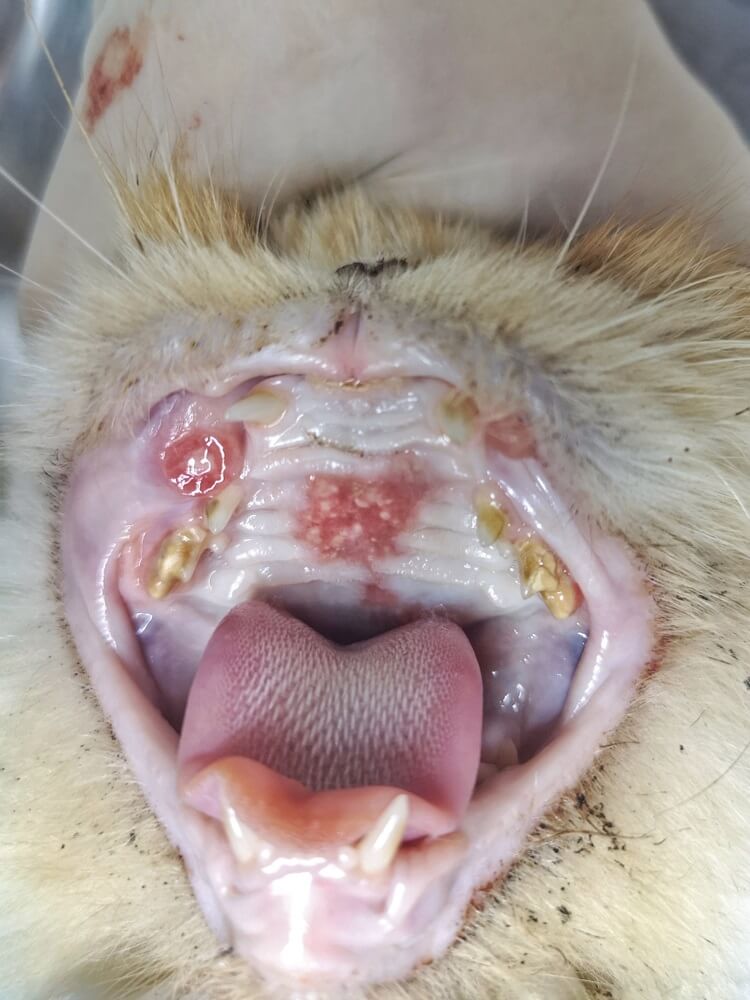
Signs Of Cat Mouth Cancer : 6 Early Signs Of Mouth Cancer You Should Not Ignore - YouTube : As cats get older and reach the age of 11 and 12, they are more prone to suffering from oral squamous cell carcinoma, although cats as young as 2 years of age can develop the condition too.. Oral pain is usually apparent, especially in cats with tumors that have penetrated the underlying bone. Oral cancer in cats symptoms. Ulcerated, red lesion on the gums, tongue or underneath the tongue. If you find your cat started sudden and uncontrolled activities like chewing, champing, foaming at the mouth or jerking of the legs. However, cats are reluctant to eat because the tumor is painful, not because they aren't hungry.
Squamous cell carcinoma is the most common oral tumor seen in cats. Oral pain is usually apparent, especially in cats with tumors that have penetrated the underlying bone. However, cats are reluctant to eat because the tumor is painful, not because they aren't hungry. As with all cancers, early detection of oral cancer offers a better outcome. It is an extremely difficult to treat cancer.
Cat Cancer Signs: 11 to Look Out For from www.rd.com If your cat's litter box habits change, it may be a sign. Oral cancer leads to the formation of harmful swellings or other lesions within the oral cavity, along the gums, palate (roof the mouth), or within the throat. If your cat is eating less but seems to be bulking up, take a trip to the vet, says rocha. If a lump or swelling is present, a biopsy can be done to determine if the tumor is cancerous. Excessive or increased drooling difficulty eating or weight loss Sometimes the first sign there is a problem is a swelling on your pet's face. Cat mouth cancer can initially be difficult to detect if a lump or tumor is not present. How is this cancer diagnosed?
Cats are not dogs and they do not drool excessively, and if you see any type of drooling that appears abnormal;
Difficulty eating and/or a loss of appetite. Bad breath may indicate oral cancer, although it's also a symptom of a sinus infection. If you notice any of these symptoms of cancer in your cat, contact your veterinarian to check things out as soon as. Squamous cell carcinoma in cats is unique in that we know that exposure to cigarette smoke is a strong risk factor. Some cats do get atypical seizures which are not because of cancer. Early detection can help, but symptoms usually do not arise until cancer is already in an advanced stage. Cat mouth cancer can initially be difficult to detect if a lump or tumor is not present. Tumors that occur in the back of the mouth or under/on the tongue are rarely seen until signs of drooling, weight loss, halitosis (bad breath), difficulty eating, and bloody discharge from the mouth are noted. As with all cancers, early detection of oral cancer offers a better outcome. If a lump or swelling is present, a biopsy can be done to determine if the tumor is cancerous. Not all cancer warning signs are apparent right away, with some changes developing over time. Any cat will droll slightly on occasion, but the key is slightly. Loose teeth can also be a symptom of oral cancer in the cat.
Cat mouth cancer can initially be difficult to detect if a lump or tumor is not present. If your cat is eating less but seems to be bulking up, take a trip to the vet, says rocha. If a lump or swelling is present, a biopsy can be done to determine if the tumor is cancerous. Cats are not dogs and they do not drool excessively, and if you see any type of drooling that appears abnormal; Then it is one of a sign of brain tumor.
PetMd: My Cat Has Black Spots On His Gums from lh6.googleusercontent.com Squamous cell carcinoma in cats is unique in that we know that exposure to cigarette smoke is a strong risk factor. Sometimes the first sign there is a problem is a swelling on your pet's face. Not all cancer warning signs are apparent right away, with some changes developing over time. He or she will look for signs of irritation or irregular texture that can indicate cancer. Oral cancer is suspected if a cat is drooling excessively, has difficulty eating or swallowing, or is bleeding from the mouth. Cats with cancer in the digestive system may vomit (sometimes projectile) and/or have diarrhea, or they suddenly stop eating. Excessive or increased drooling difficulty eating or weight loss Oral cancer in cats symptoms.
The first signs of an oral tumor are often perceived as decreased or absent appetite and weight loss.
Some cats do get atypical seizures which are not because of cancer. However, cats are reluctant to eat because the tumor is painful, not because they aren't hungry. The first signs of an oral tumor are often perceived as decreased or absent appetite and weight loss. Sudden weight gain or bloating can be a sign of cat cancer, specifically gi, in cats. How is this cancer diagnosed? If your cat's litter box habits change, it may be a sign. The three most common signs of a malignant oral tumor are: However, an irritation or abnormal texture on the inside of your cat's mouth could indicate the process of cancer is beginning. Straining to urinate or defecate. Oral cancer in cats symptoms. It also includes lips, the hard and soft palate (roof of the mouth), upper and lower jaw, cheeks, tongue, and the floor of the mouth. Symptoms of mouth cancer in cats mouth cancer in cats may be noted by a visible tumor or mass of the oral cavity. Oral cancer accounts for approximately 10% of feline cancer cases and is the third most common site of cancer in cats.
Then it is one of a sign of brain tumor. Unfortunately, squamous cell carcinoma tumors that grow within the tissues of the tongue, tonsils, roof, or back of the mouth often go unnoticed. Excessive or increased drooling difficulty eating or weight loss 1 signs and symptoms of oral cancer in cats If you find your cat started sudden and uncontrolled activities like chewing, champing, foaming at the mouth or jerking of the legs.
Mouth Cancer In Cats: Causes, Symptoms & Treatment - We're ... from allaboutcats.com Squamous cell carcinoma is the most common oral tumor seen in cats. Oral cancer is suspected if a cat is drooling excessively, has difficulty eating or swallowing, or is bleeding from the mouth. Bad breath may indicate oral cancer, although it's also a symptom of a sinus infection. Carcinomas can occur in any part of the body, including the mouth. As cats get older and reach the age of 11 and 12, they are more prone to suffering from oral squamous cell carcinoma, although cats as young as 2 years of age can develop the condition too. Ulcerated, red lesion on the gums, tongue or underneath the tongue. Any cat will droll slightly on occasion, but the key is slightly. Not all cancer warning signs are apparent right away, with some changes developing over time.
If you notice any of these symptoms of cancer in your cat, contact your veterinarian to check things out as soon as.
Carcinoma is a type of tissue cancer that is particularly virulent, metastasizing quickly through the body, often with fatal results. Squamous cell carcinoma is the most common oral cancer in cats. Feline lymphoma usually strikes the digestive system, causing excessive vomiting and diarrhea. Any cat will droll slightly on occasion, but the key is slightly. If your cat's litter box habits change, it may be a sign. They may approach their food bowl and attempt to eat, but only sniff at the food and not ingest it. It is an extremely difficult to treat cancer. 1 signs and symptoms of oral cancer in cats As with all cancers, early detection of oral cancer offers a better outcome. Oral cancer is suspected if a cat is drooling excessively, has difficulty eating or swallowing, or is bleeding from the mouth. In more advanced cases, there may be a lump or swelling. Cat mouth cancer can initially be difficult to detect if a lump or tumor is not present. Mouth cancer can be a tumor located anywhere within a cat's oral cavity including the lips, tongue, cheeks, roof of the mouth, upper or lower jaw, and back of the mouth.